

The Indianapolis-Carmel-Anderson Metropolitan Statistical Area (MSA), commonly referred to as “Indy,” serves as the economic and cultural hub of central Indiana. Known for its strong logistics infrastructure, professional sports presence, and growing life sciences sector, Indianapolis continues to emerge as a stable and diversified Midwest growth market.

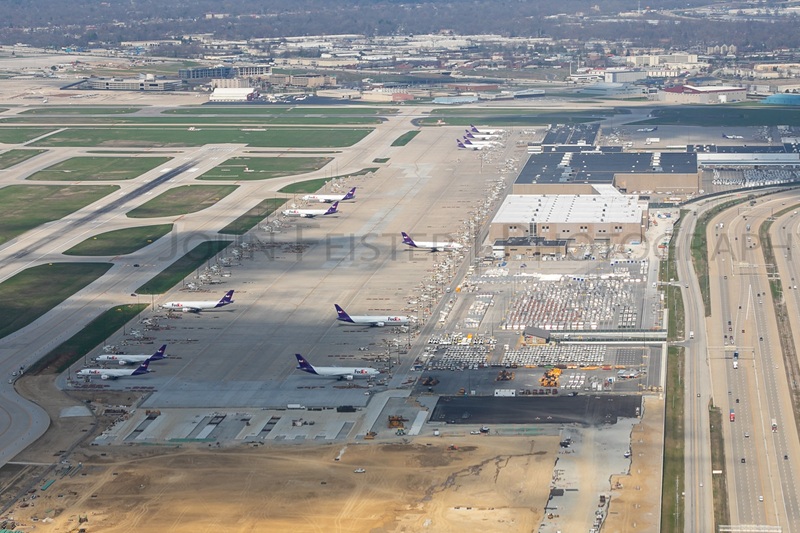
The MSA has a population of 2,174,833 residents, making it one of the largest metros in the Midwest. Indianapolis benefits from a central geographic location that has made it a national leader in transportation and distribution, anchored by major interstates, one of the largest FedEx air hubs globally, and extensive rail connectivity.

The economy is anchored by a diverse mix of industries including healthcare, life sciences, advanced manufacturing, logistics, and finance. Major employers such as Eli Lilly and Company, Indiana University Health, and Amazon play a defining role in shaping the region’s employment base.

Indianapolis is also recognized for its affordability and quality of life relative to peer metros, supported by a vibrant downtown, professional sports franchises, and nationally recognized events such as the Indianapolis 500. These attributes continue to attract both residents and businesses, reinforcing long-term population and economic growth.


Indianapolis Economy

Indianapolis boasts a highly diversified and resilient economy, supported by its strategic central U.S. location and strong industry mix. Key sectors include healthcare and life sciences, logistics and distribution, manufacturing, and financial services.

Healthcare and life sciences represent a cornerstone of the regional economy, led by Eli Lilly and Company (13,298 employees locally) and Indiana University Health (over 39,000 system-wide employees). The region has established itself as a national hub for pharmaceutical manufacturing and medical research.

Logistics and distribution are equally critical, with Indianapolis ranking among the top U.S. metros for freight movement. Major employers include Amazon and FedEx (5,500 local employees).

Manufacturing remains a key driver, supported by companies such as Rolls-Royce North America (4,000 employees) and Allison Transmission (2,000 employees).

The labor market remains stable, with unemployment typically tracking at or below national averages. Continued corporate expansions and relocations, particularly in life sciences and advanced manufacturing, underscore Indianapolis’ long-term economic momentum and business-friendly environment.

Indianapolis Population


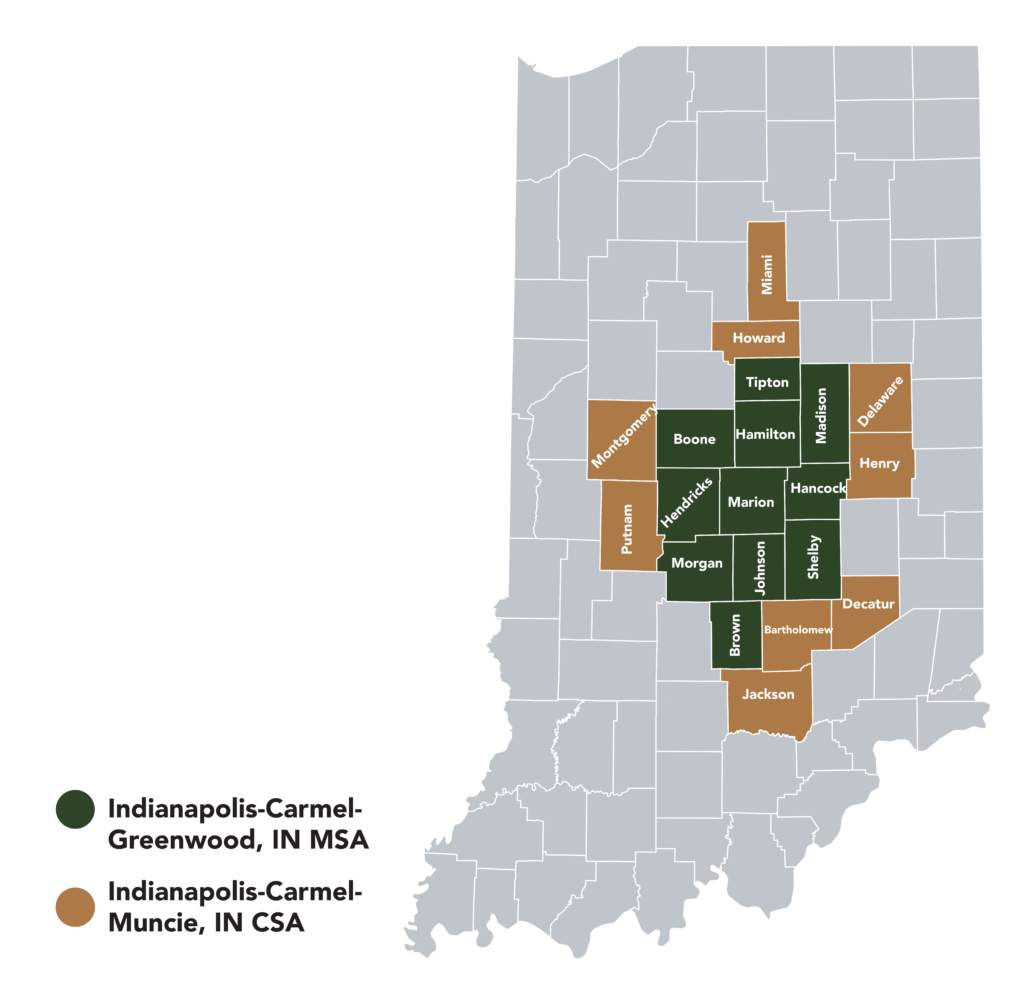
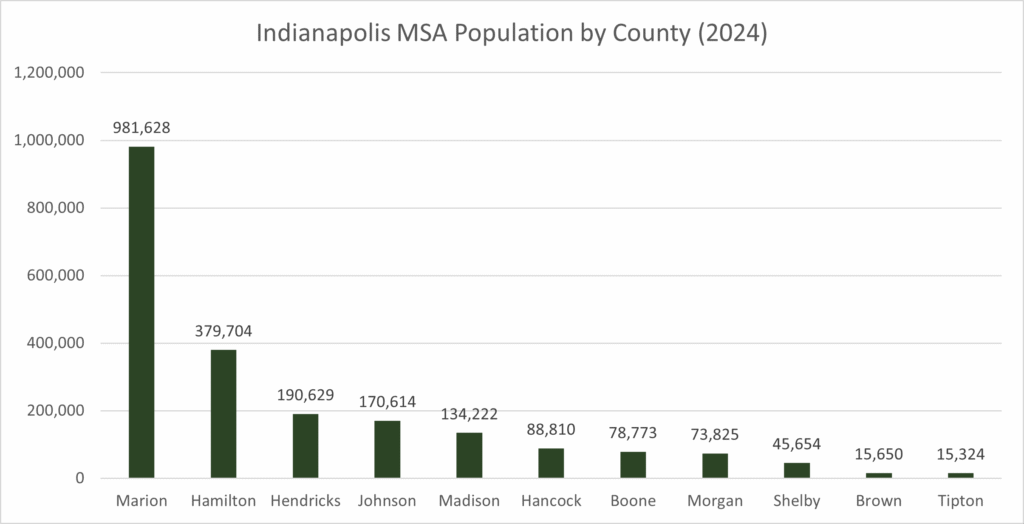
The Indianapolis MSA has an 11-county population of 2,174,833, and the additional 9 counties that make up the Indianapolis-Carmel-Muncie, IN CSA bring the 20-county region to a total population of 2,691,579. The MSA population has grown 3.92% from 2020-24, led by Hancock County (10.76%), Boone County (10.74%), and Hamilton County (8.79%). The unemployment rate currently sits at 2.5%, indicating a stable labor market supported by diverse employment sectors.

Demographics

Total Population
2,174,833
Population Growth (2020-24)
3.92%
Unemployment Rate (Dec 2025)
2.5%

Multifamily Highlights

Indianapolis, IN Multifamily Analysis


Multifamily Overview
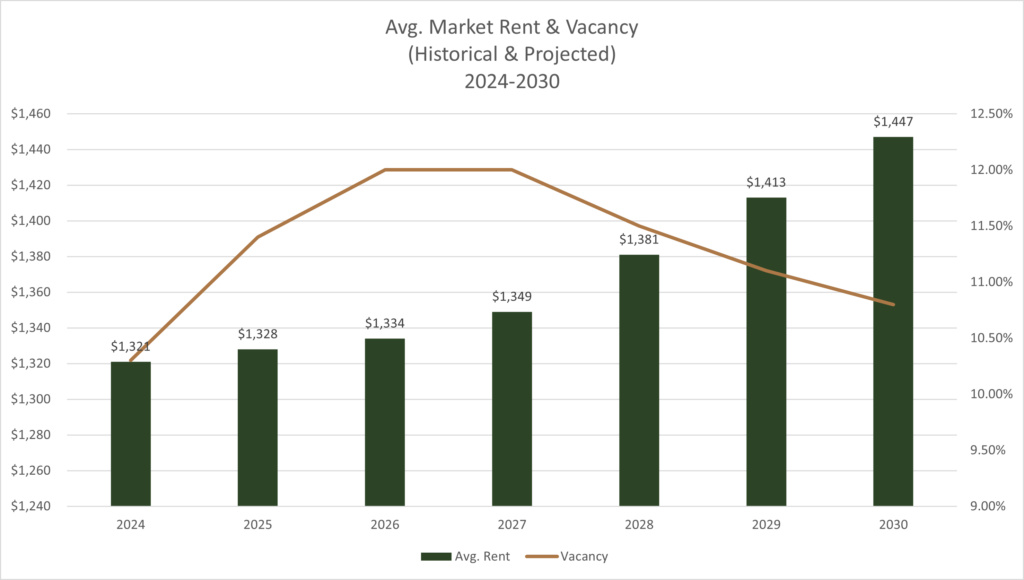
Indianapolis’ multifamily market remains fundamentally stable, supported by consistent population growth, a diversified economy, and relative affordability compared to coastal and Sun Belt markets. The market contains approximately 195,000 units, reflecting steady long-term expansion driven by sustained renter demand.

Supply & Vacancy Trends
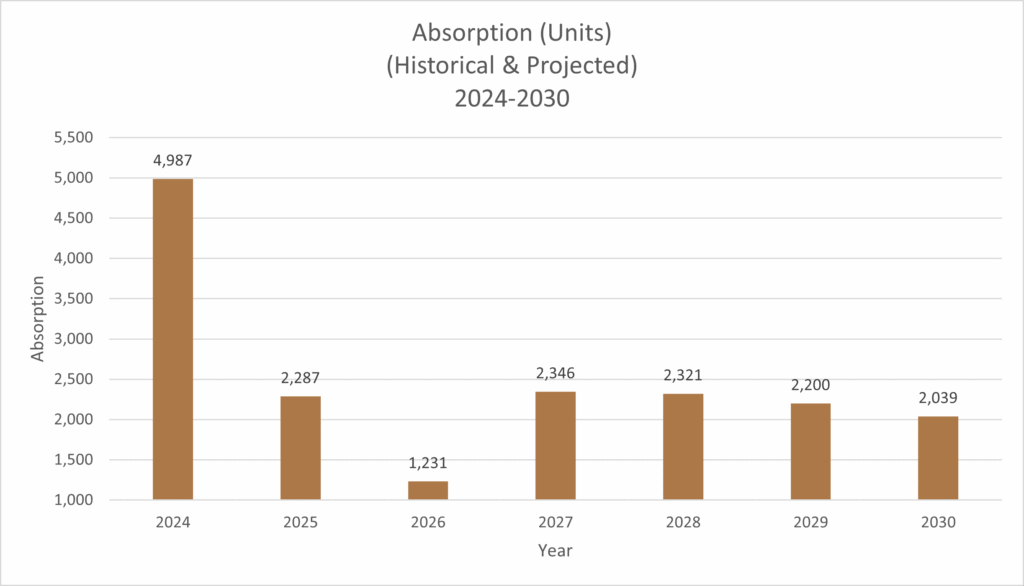
Following a period of elevated deliveries, market conditions have softened slightly but are beginning to stabilize. Vacancy has risen above historical norms due to new supply, but absorption has remained positive, indicating underlying demand strength. As new construction moderates, vacancy is expected to gradually compress over the next 12–24 months.

Rent & Market Positioning
Average asking rents remain competitive relative to national benchmarks, reinforcing Indianapolis’ affordability advantage. While rent growth has slowed due to increased supply and concessions, fundamentals are expected to improve as the development pipeline normalizes. The market remains attractive to renters seeking value compared to higher-cost metros.

Construction & Development Activity
Development activity has been elevated over the past several years, though the pipeline is now moderating due to higher interest rates and construction costs. New deliveries have been concentrated in higher-quality Class A assets, particularly in suburban growth corridors and urban infill locations. As starts decline, the market is expected to transition toward equilibrium, supporting improved occupancy and rent growth moving forward.

Primary Source: CoStar

Major Employers

  1. Eli Lilly & Company HQ

    13,298 Jobs  | Learn More
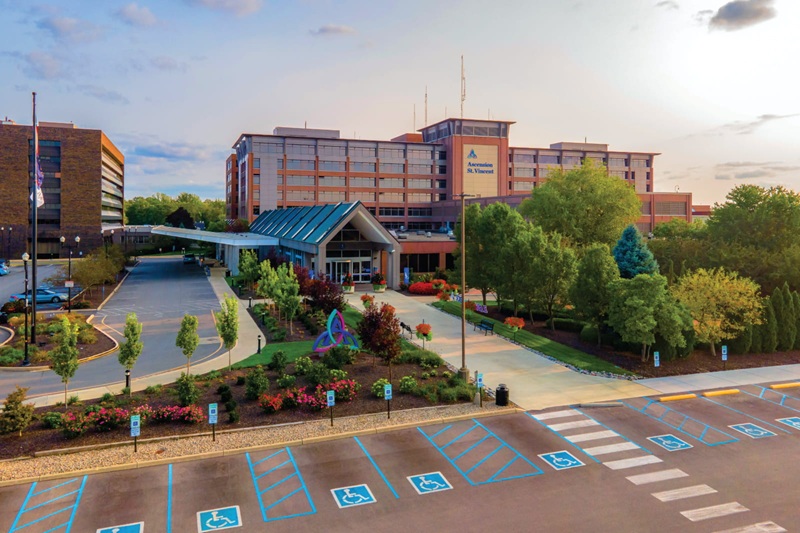
  2. Ascension St Vincent Hospital

    10,000 Jobs / 800 Beds  | Learn More
  3. Indiana University School of Medicine

    6,126 Jobs  | Learn More
  4. FedEx Indianapolis Hub

    5,500 Jobs / 1.5 million SF  | Learn More
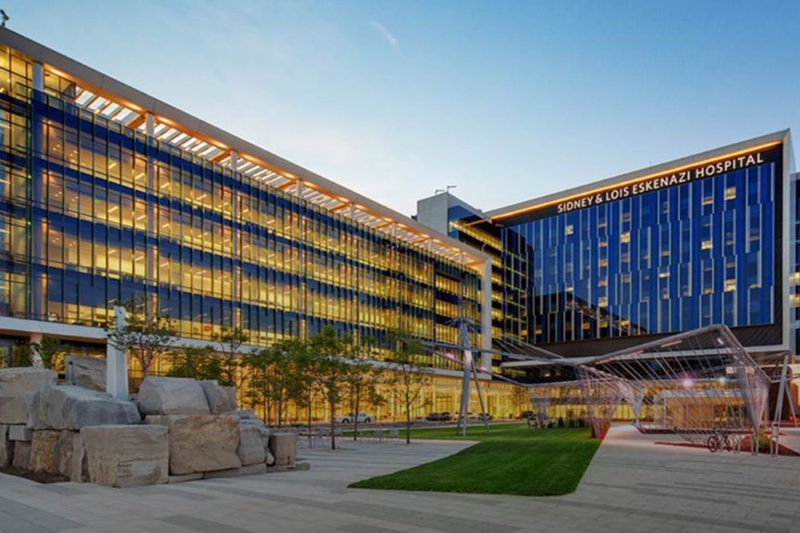
  5. Eskenazi Health / Sidney & Louis Eskenazi Hospital

    5,246 Jobs / 400 Beds  | Learn More
  6. Elevance Health HQ

    4,978 Jobs  | Learn More
  7. Roche Diagnostics U.S. HQ

    4,815 Jobs  | Learn More
  8. IU Indianapolis

    4,700 Jobs / 20,677 Enrollment  | Learn More
  9. Rolls-Royce Corporation

    4,000 Jobs  | Learn More
  10. New Era Technology

    3,000 Total Jobs  | Learn More
  11. Franciscan Health Indianapolis

    2,583 Jobs / 432 Beds  | Learn More
  12. IU Health Methodist Hospital

    2,500 Jobs / 1,000 Beds  | Learn More
  13. OneAmerica HQ

    2,500 Jobs  | Learn More
  14. Roudebush VA Medical Center

    2,000 Jobs / 159 Beds  | Learn More
  15. Allison Transmission HQ

    2,000 Jobs  | Learn More
  16. Salesforce Tower Indianapolis

    2,000 Jobs  | Learn More
  17. UPS Regional Super Hub

    580 Jobs / 893,000 SF  | Learn More
  18. IU Health University Hospital

    440 Beds / 39,000 Statewide Jobs  | Learn More

Other Demand Drivers

  1. Castleton Square Mall

    1,382,000 SF; Macy's, JCPenney, Dick's, H&M, Lego, H&M, AMC  | Learn More
  2. Circle Centre Mall (Traction Yards)

    Traction Yards is a $600M redevelopment currently underway  | Learn More
  3. Gainbridge Fieldhouse

    Home of the Indiana Pacers; 18,345 Seats  | Learn More
  4. Lucas Oil Stadium

    Home of the Indianapolis Colts; 67,000 Seats  | Learn More
  5. Indianapolis International Airport

    10.6 million passengers in 2025  | Learn More
  6. Indianapolis Motor Speedway

    Largest sports venue in the world; $1.058 billion economic impact  | Learn More
  7. Indianapolis Zoo

    1,000,000+ visitors annually  | Learn More
  8. Butler University

    5,756 enrollment  | Learn More
  9. University of Indianapolis

    4,000 enrollment  | Learn More
  10. Carmel, IN

    #2 'Best Places to Live' (Livability)  | Learn More

Sources & Comments

1. Indianapolis-Carmel-Greenwood, IN Metropolitan Statistical Area consists of 11 counties, according to Office of Management and Budget: (1) Boone (2) Brown (3) Hamilton (4) Hancock (5) Hendricks (6) Johnson (7) Madison (8) Marion (9) Morgan (10) Shelby (11) Tipton. The Indianapolis-Carmel-Muncie, IN CSA includes all 11 counties in addition to Bartholomew, Decatur, Delaware, Henry, Howard, Jackson, Miami, Montgomery, and Putnam counties.

2. Primary Sources: (1) https://fred.stlouisfed.org/ (2) CoStar (3) www.bls.gov (4) https://www.yardimatrix.com/ (5) https://www.msci.com/

3. Sales Comps are from 03/2025 – 02/2026

4. Development Pipeline as of 3/18/26

5. This information supplied herein is from sources we deem reliable. It is provided without any representation, warranty, or guarantee, expressed or implied as to its accuracy